I can’t talk or write enough about the value of good solid green foliage in the garden. It’s getting harder to find good greens with the sea of crazy colors being hybridized these days, and the endless choice of so many variegated and copper leaf plants. I have written before about using dark greens in the flowering border as a break or ‘pause plant’ as I like to call it. These solid greens slow down the experience of looking at flowering plants, and the same idea can be applied to trees and shrubs in the larger landscape. I find poetry in the garden is often to be found in the subtle shifts from one value of green to another. Putting a dark green plant behind a lighter leaf plant makes the lighter plant pop.
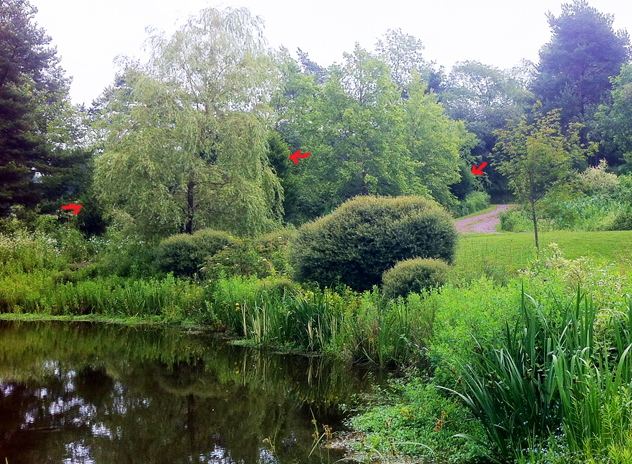
Arborvitae techny used behind weeping willow and heritage birch
The reverse of this is also true.
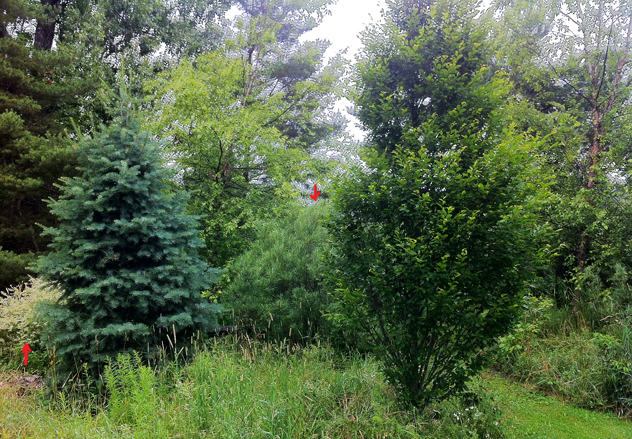
light foliage of Salix Hakuro Nishiki behind Abies Concolor and Salix Elaeagnos behind Carpinus.
In a larger landscape, the shift from dark to light to mid green can be played out in large scale, creating a very beautiful symphony of greens. Paying attention to how we plant for maximum affect is a especially beneficial when trees and shrubs are no longer in flower.
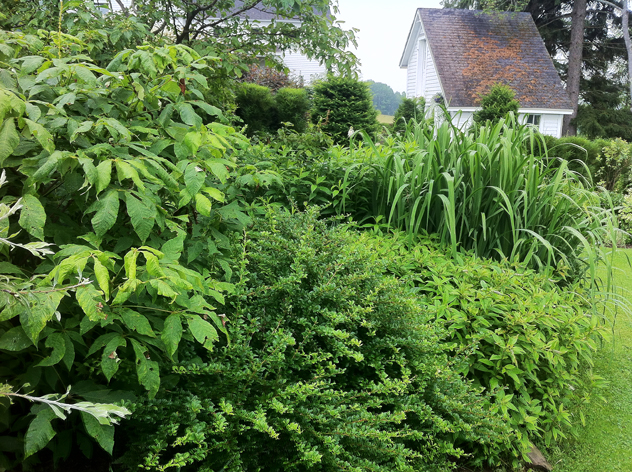
Sea of green textures: Rhamnus fineline, bottlebrush buckeye, berberis Sparkle, & yellow flag iris.
I have taken a few photos to show how I like to use some of the deep greens. Yews, arborvitae techy, star magnolia, climbing hydrangea, tall blades of yellow flag iris, lilac, dark willowy foliage of buckthorn-fine line, and dark waxy leaves of the fringe tree. As I look out my window I can’t help noticing and appreciating the dark green foliage of my horseradish – what a handsome plant! I am sure you have your favorite greens plants as well.
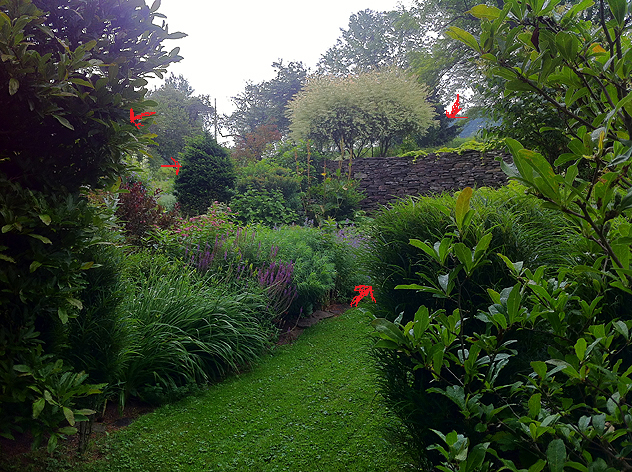
Rhamnus finline, Star Magnolia in foreground, and Japanese yew.
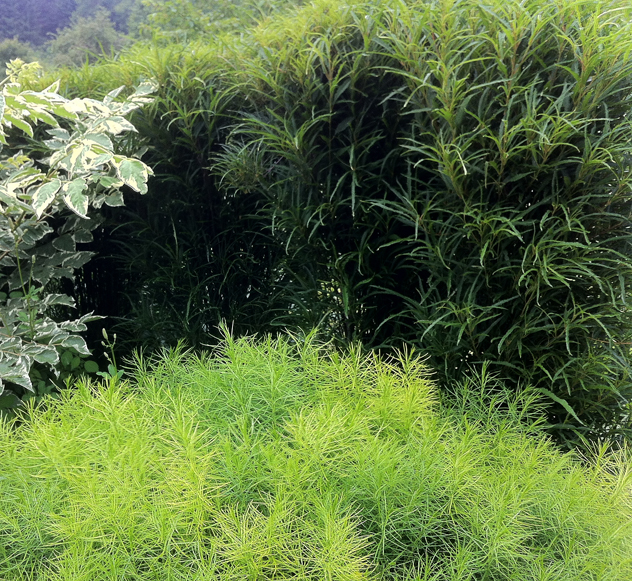
Dark foliage of rhamnus , variegated foliage of aralia and chartreuse foliage of amsonia in foreground.
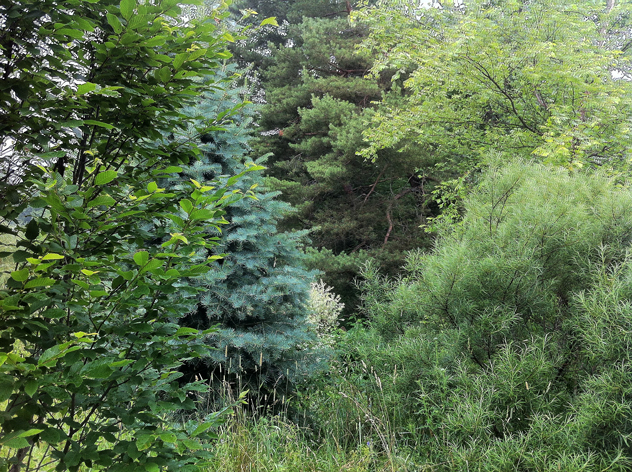
Symphony of greens
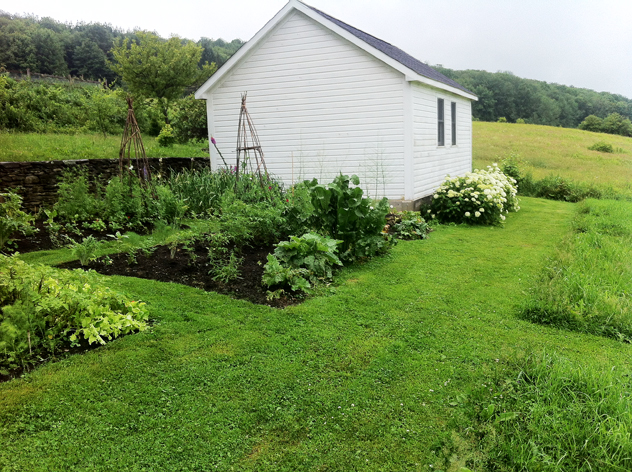
dark foliage of horseradish in vegetable garden, & hydrangea Annabel.


 Rooting for Ideas